
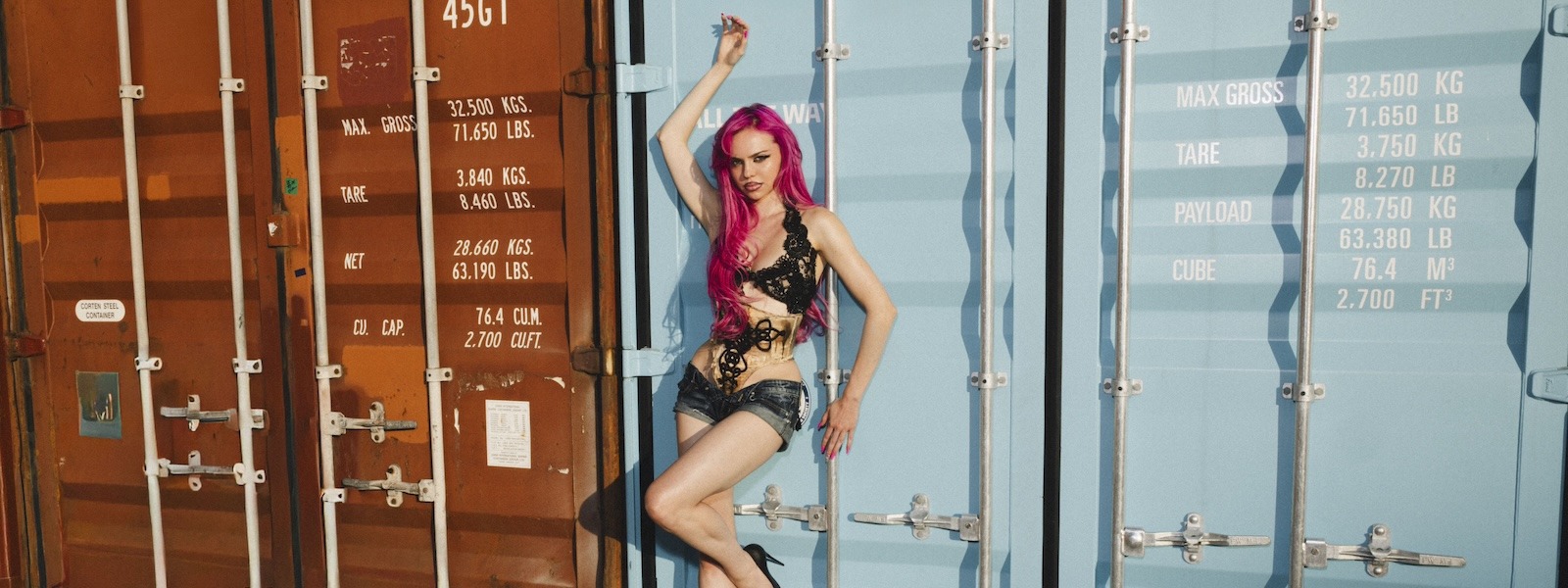
How Adéla’s “Ain’t In LA” Challenges the American Dream
Article by Sophia Hysaw – ADÉLA by Iulia Matei
The rising Slovak pop artist Adéla has proven once again, with her new single “Ain’t In LA” produced by Dylan Brady of 100 gecs and Lizzo producer Blake Slatkin, that her music isn’t just dance-worthy but also worthy of discussion. While the song emulates Miley Cyrus’s 2013 album Bangerz with the blend of synth-pop and R&B production, Adéla takes her artistry a step further, turning her lyrics into a worldwide declaration many can relate to.
“Ain’t In LA”, though glamorous on the surface, is at its core filled with dissatisfaction; much like the American Dream Adéla’s pop hit is deconstructing. Throughout the song Los Angeles is used as both a placeholder and a paradigm for a larger cultural illusion. The American obsession with becoming ‘someone,’ or achieving success—but what really is success, and who actually gets to attain it?
Adéla revealed that “Ain’t In LA” was inspired by a photograph of her mother standing in front of a wall decorated with posters of Western pop culture. The images were smuggled in from Germany by Adéla’s grandfather into what was formerly Czechoslovakia, where Western media was banned. “It made me think, ‘There are so many beautiful girls with dreams who will never get their flowers like my mom.” Adéla said in a Stereogum interview. “I wrote this for her and the billion other bitches who are probably cooler than me.”
At the core of Adéla’s hit song “Ain’t In LA” is a girl with less means than her dreams seemingly require. She’s said to share a room with her younger brother and gets her clothes secondhand from her best friend’s mother. She even cuts them up to create her own style, most likely taking influence from popular media figures such as Madonna and Destiny’s Child, which are said to be pictured on her bedroom wall.
In this verse, is Adéla drawing from her own life experiences? Maybe, but the strength in the lyrics lies in how recognizable and relatable this girl is for many. For much of the world passed down clothing, shared bedrooms, and overall limited resources are not unusual aspects of childhood; they are simply a factor of ordinary life. It is the abundance culture presented as normal particularly by namely American media that is comparatively rare, and a false representation for how most in this country really live.
Yet the girl Adéla details, like numerous others, has consumed and therefore absorbed the message that her dreams cannot exist at home. It is not uncommon for one to daydream in their bedroom about all the places they long to flee to, and to lament on how lame their hometown is in comparison, even in America. It is the idea that places like Los Angeles are where success appears to be waiting for anyone bold enough to arrive. But in the chorus Adéla disrupts that fantasy and reassures us that we can come from somewhere under-recognized and still have something of worth to express:
“Maybe tonight, we don’t gotta run away
It’s all a lie, the baddest bitches ain’t in L.A.
Enjoy the ride, I know that you might wanna escape
It’s all a lie, the baddest bitches ain’t in L.A.”
Maybe these ambitions that so many seem to have are not misguided and maybe leaving home isn’t always unnecessary. But the reassurance conveyed here is that geography doesn’t determine a person’s overall value. Coming from somewhere less known than Los Angeles doesn’t make you any less talented, beautiful, or worthy of success. When Adéla celebrates “all of the girls in them unknown cities,” she is shifting the focus from these mainly known cultural centers and toward the uniquely talented people who have been taught to view themselves as unimportant.
In doing so, Adéla is not simply rejecting Los Angeles, or more broadly American success culture. She is revealing to us the fantasy that idealizes them and gives them their power in the first place. Pop culture teaches us that only a handful of places are worth living in if we want glamorous, or even merely successful, lives. Places like New York, and Chicago, and Los Angeles may be major centers of creativity and business, but what makes these places remarkable is the people who populate them. These cities would not be what they are without the diversity of thought and expression produced by their residents’ vastly varying life experiences, experiences that are intriguing and completely un-American in nature.
I know I speak for many when I say we are tired of hearing the same old washed-up narratives from the same small yet powerful Western demographics. And we are tired of being told where and how we should chase our aspirations, especially when the advice is utterly outdated, like this old idea of the American Dream. More stories should be getting told, and Adéla is pushing for us to listen, because there are more undiscovered voices in this world than I think we even realize. And it’s time they had their chance to hold the mic.
Check out more great articles here!
Links:
Official: https://www.adelaxo.com/
Instagram: https://www.instagram.com/adelajergova/
TikTok: https://www.tiktok.com/@adela