

This Is Lorelei Speaks Chicago’s Language at a Sold-Out Thalia Hall
Review by Shawna O’Hara, Editor – Photos by James Scully
Seven songs into This Is Lorelei’s sold-out Tuesday night show at Thalia Hall, Nate Amos had said remarkably little. He didn’t need to.
Then came Chicago.
Nestled deep in the set was “The Singer in My Band.” Amos sang out, “you can’t belong to Texas when you’re from Chicagoland,” and the sold-out room erupted. It was the first time Chicago would make its presence known that evening, but it wouldn’t be the last.
Something about This Is Lorelei’s presence and sound feels natural in this room, in the city where the project first took shape more than a decade ago. On Tuesday night, Chicago was more than happy to welcome that sound back home.
With melodies and riffs that pull from folk, blues and country, alongside a crunchy smattering of the Replacements and Wilco, This Is Lorelei shares DNA with some of the most revered sounds in American music. There’s enough country in it for Nashville, enough indie weirdness for New York and enough ’90s alternative DNA to exist almost outside of time.
But, again, this was Chicago. And Tuesday night, it all belonged here.
There was something very 93XRT-coded about the evening and the music that carried it. Welcoming, honest, good-natured and a little witty. Whether Amos consciously embodies the city where his project began is a secret between him and his guitar, and neither is telling. The crowd, meanwhile, delighted in nearly every note.
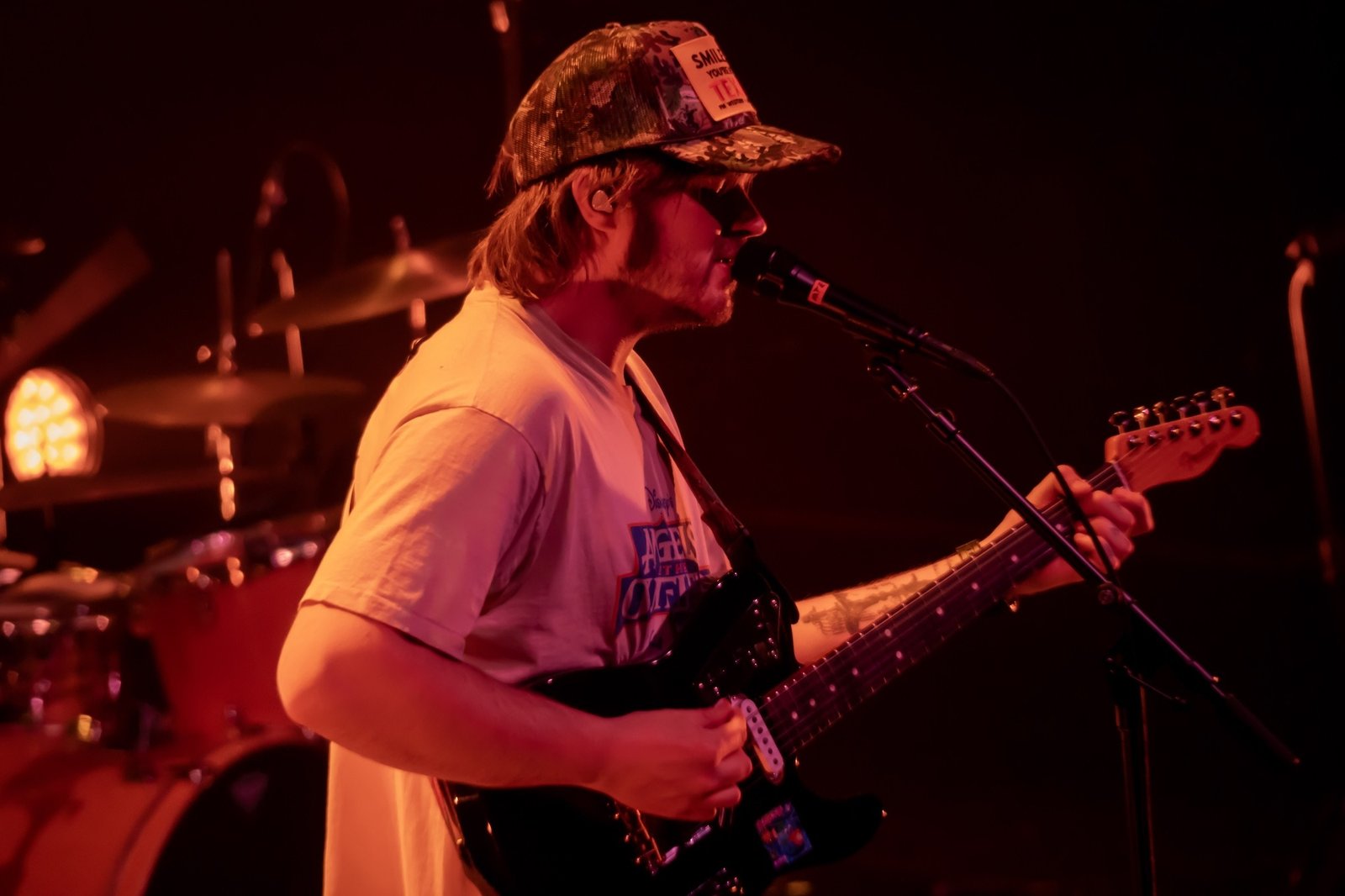
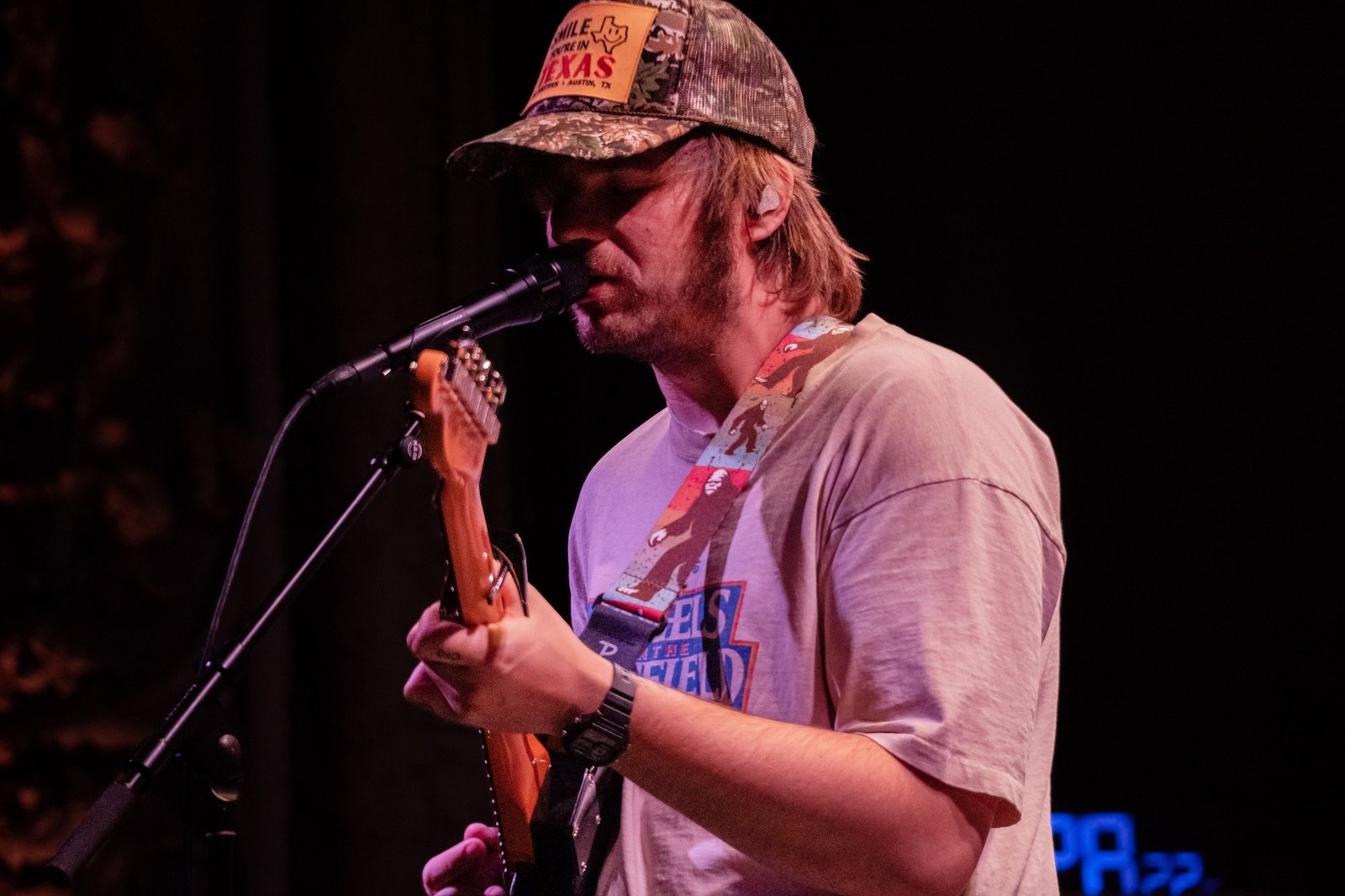
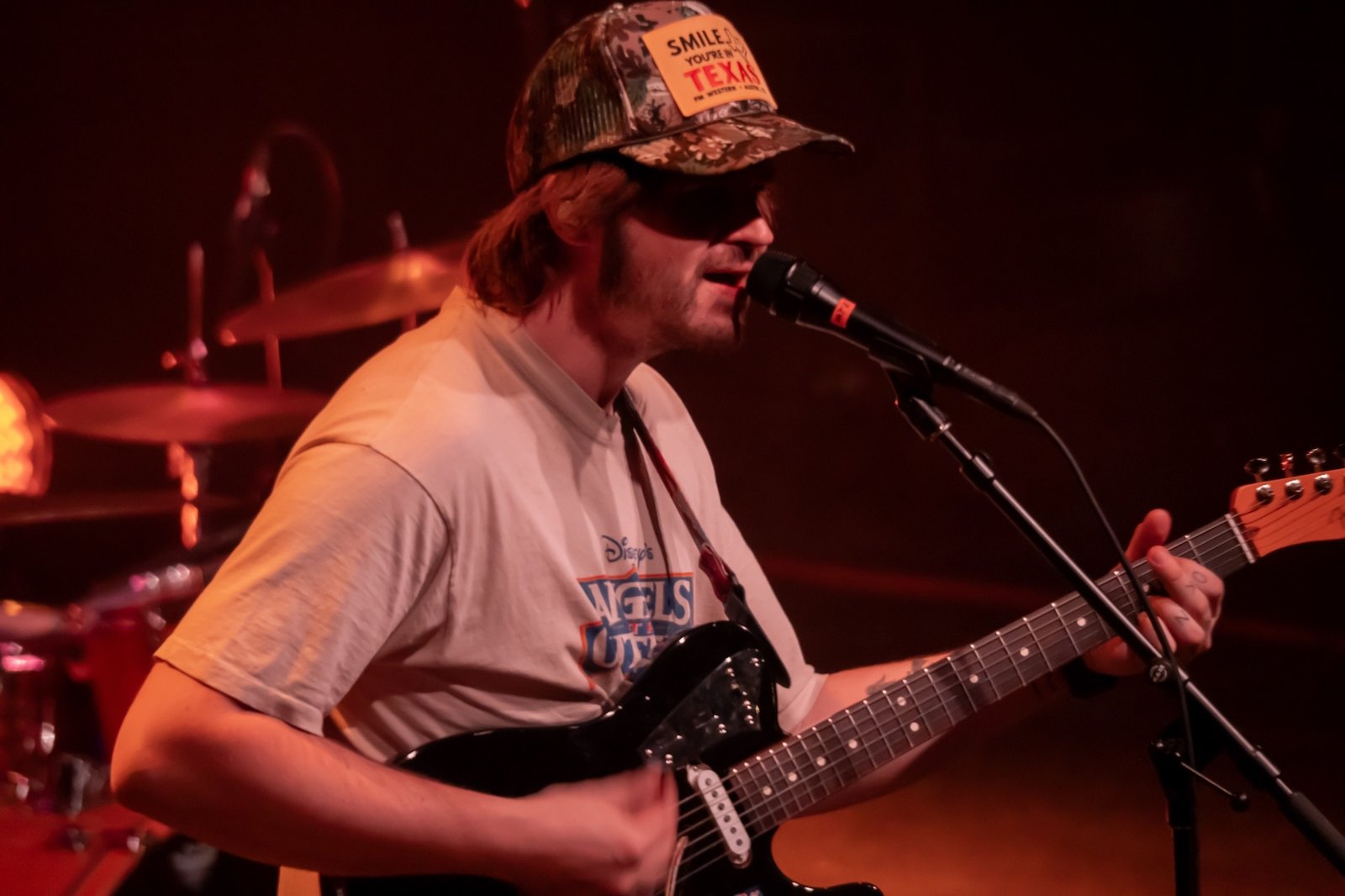
Amos entered the stage slowly, casually and unassumingly. He does not look particularly interested in playing the part of a rock star. Wearing a camo hat, T-shirt and jeans, he ambled onstage while a mug, apparently containing something warm, rested atop his amp. And, crucially, Amos is remarkably tall. His physical presence looms large, but everything else about him seems designed to disappear into the music.
The music has no such intention.
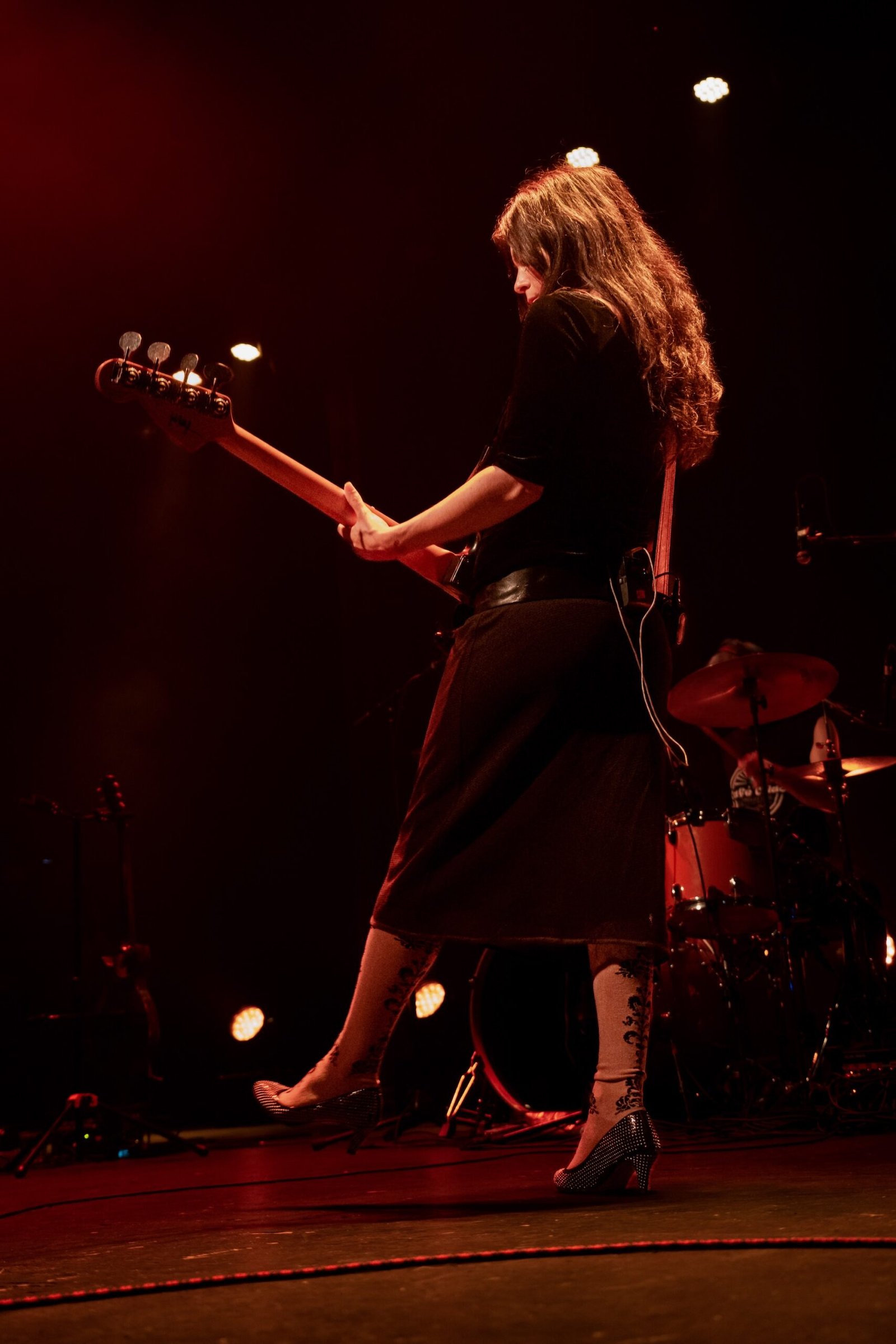
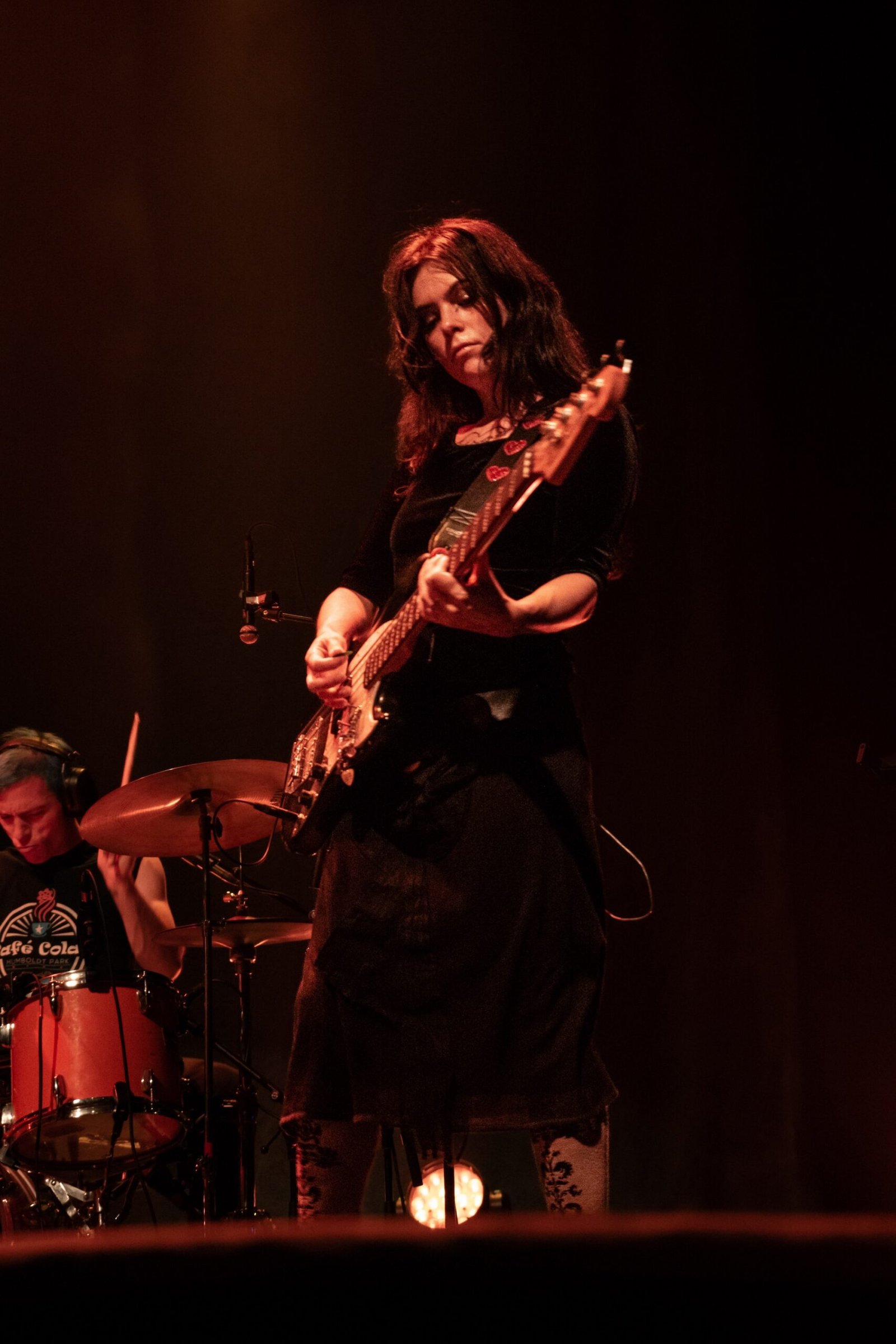
The band filled Thalia Hall with enormous basslines, keyboards, synth effects and guitar riffs that crunched and carried in equal measure. Amos’s touring musicians quickly proved themselves not simply accompaniment, but essential characters in the sound. Behind the kit, his blue-haired drummer attacked cymbal after cymbal. His bassist danced, shuffled and kicked along with the beat in snakeskin boots. As the show progressed, the keyboardist rose to his feet, adding tambourine and backing vocals to an already expansive mix.
At one point, nearly everybody was harmonizing.
At another, the bassist knelt before eventually sitting atop her amp, watching Amos play as intently as anyone in the audience. Amos’s voice, soft, low and almost delicate, floated against a rhythm section capable of becoming enormous. Sometimes that voice was the unmistakable focal point. At others, the bass and drums became characters unto themselves.
Somehow, nothing competed. It coalesced.
Sonically, This Is Lorelei is terribly difficult to put into one box. There is too much to discover. A little of Elvis Costello’s melodic sensibility creeps into “Sailing (Your Baby’s Down).” Elsewhere there is some Westerberg-ish looseness, along with the blues, folk and country that had been apparent almost from the moment the band took the stage. Yet none of it sounds derivative. These are familiar ingredients assembled into something recognizably Amos’s.
The pacing of the show was unusual in a way that only strengthened the music. The band came out swinging, immediately launching into “Where’s Your Love Now.” From there, momentum took over.
Amos and his band played such a tight set that one might wonder whether his time was about to expire on a famously unforgiving Chicago parking meter. There were barely breaks between songs and little banter to fill them. Amos would tune his guitar, occasionally take a sip from the increasingly forgotten mug cooling atop his amp, and then launch straight into the next song.
The show didn’t feel rushed. It felt cohesive. Tight, professional and deliberately paced, it moved like the city at rush hour set to a soundtrack full of life and memory.
It felt like Chicago.
The audience seemed to understand that instinctively. Heads bobbed almost in unison. Fans sang along throughout the night, and even from the back of the room, the crowd’s attention rarely appeared to drift. Somewhere amid the rapid-fire succession of songs, this reviewer stopped taking notes entirely and instead found herself tapping a foot and smiling along with everyone else.
That may be the greatest trick in Amos’s music. It is meticulous without feeling precious, familiar without feeling recycled and emotionally revealing without demanding that its creator stand center stage and explain himself.
Amos largely let the songs do that.
There is little about This Is Lorelei that feels engineered for this particular musical moment, and that may be precisely why the music feels capable of surviving well beyond it. Amos has assembled a sound from pieces of American rock history without making a museum of them. At Thalia Hall, those pieces sounded alive, immediate and completely at home.
Near the end of the night, Amos finally offered the audience something close to a declaration.
“Thank you so much. I fucking love Chicago.”
By then, that much was obvious.
After all, Amos had already sung the promise himself: “If I can make it to Chicago, I ain’t ever gonna leave.”
On Tuesday night, Chicago didn’t seem particularly interested in letting him go.
Gallery:









Read more reviews here!
Links:
Official: https://thisislorelei.com/
Instagram: https://www.instagram.com/hellothisisnate/
TikTok: https://www.tiktok.com/@thisisloreleiofficial